A Rainy Afternoon Story Circle for All Ages
A rainy afternoon story circle turns familiar local details into gentle comic tales, with simple prompts and room for every age to join or listen.
How do you get a rainy afternoon story circle going without making anyone feel they have to perform? Start with a familiar place, a handful of gentle prompts and the understanding that listening counts as taking part. A story about the bus shelter, the muddy footpath or the village shop can carry plenty of comedy without anyone needing a polished punchline.
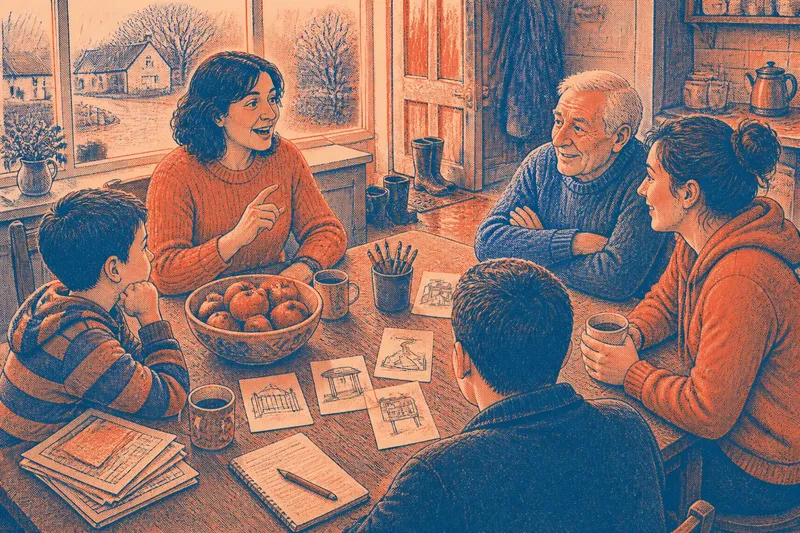
Imagine a family and a few neighbours gathering in a kitchen after steady rain has kept everyone indoors. They want to share short, place-based stories, but the group includes a quiet child, an older neighbour who likes a long tale and someone who would rather listen than speak. Their aim is not to put on a show. It is to notice how a place shapes a funny moment, then let different voices give that moment their own colour.
A Kitchen Made Ready
The host shifts a bowl of apples and a stack of post from the table, then leaves the chairs where people can see one another without forming a formal audience. A window looks out towards the lane; wellies drip by the back door. These details give the gathering a local feel before anyone tells a story.
There is no need to decorate the room as a stage or ask everyone to sit in a circle if the kitchen does not suit one. The useful choice is a layout that makes it easy to speak across the room and just as easy to stay quiet. A mug, a place to rest a notebook and a view of the weather may be enough.
The host sets out paper and pencils, but introduces them as optional. A person might jot down a place name, sketch a gate or write a single word; another can hold an idea in mind. Keeping these materials informal avoids turning a relaxed gathering into a writing lesson.
One small invitation helps set the tone: “Bring us a moment from around here that still makes you smile.” It does not demand a finished story, a joke or a particular kind of memory. If someone prefers to invent rather than recount, that is welcome too.
Let the room feel like a kitchen, not an audience waiting to judge.
Prompts From Nearby
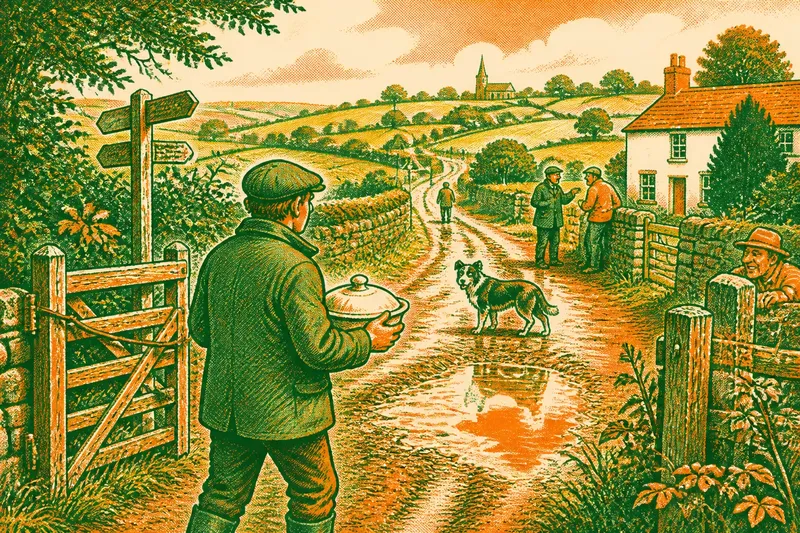
The host offers prompts that begin with places rather than character types. That choice matters. A rural setting is more than a picturesque backdrop: it affects who meets whom, what gets delayed and what people can see or hear. A lane can funnel neighbours into an awkward conversation; a noticeboard can let one small misunderstanding travel around the village.
Prompts can be spoken aloud or placed on slips of paper for anyone who wants one. The host offers a few and leaves space for the group to add its own:
- A gate that is easy to open in theory and awkward in practice.
- A bus shelter where three people have three different ideas about the weather.
- A village notice that is clear to its writer but puzzling to everyone else.
- A footpath that seems to lead somewhere different in the rain.
- A shop queue where a small errand grows into a local mystery.
Each prompt gives a starting point, not a plot to obey. Anyone can change the place, invent a detail or pass. The host does not ask people to name real neighbours or retell an identifiable mishap without permission; local humour feels warmer when the target is a muddle, a habit or the teller’s own confusion rather than a person who is absent.
Say the group draws “a gate that is awkward in practice”. One teller might invent a visitor who opens it the wrong way and politely blames the wind. Another might make the gate seem to have a mind of its own. Both stories begin in the same sort of place, but the voices and comic turns belong to their tellers.
Room For Every Voice
When the first prompt is offered, the host does not go round the table demanding an answer from each person. Instead, they tell a brief invented story of their own: they went to close the garden gate, found it already shut, and spent a moment explaining to it why they had come. The story is small enough to leave room for other approaches. It also shows that a comic tale need not end in a grand punchline.
Then the host asks whether anyone has a place or detail to add. The quiet child points to the puddle outside. The older neighbour remembers the shelter where people wait for the bus. Someone else would rather listen. All three responses shape the gathering, even though only one is a spoken story.
A prompt can also be passed along as a shared beginning. One person gives the setting, another adds a complication, and a third decides how the moment ends. This can make starting easier, but it should remain an invitation, not a test of quickness. If a participant wants to stop after one sentence, the story can stop there.
For mixed ages, the host keeps the language open and the stakes gentle. Children may enjoy a surprising object or an animal behaving oddly; adults may lean towards a familiar social tangle. Neither needs to be translated into the other. A good circle lets a child’s literal interpretation sit beside an adult’s dry aside without insisting that one is the “proper” joke.
Listening can be made visible without applause or scoring. The group might respond with a detail they liked: “I can see that dripping sign,” or “I know that sort of queue.” This recognises the teller’s picture of the place without ranking the story by how loudly the room laughs.
Finding A Comic Turn
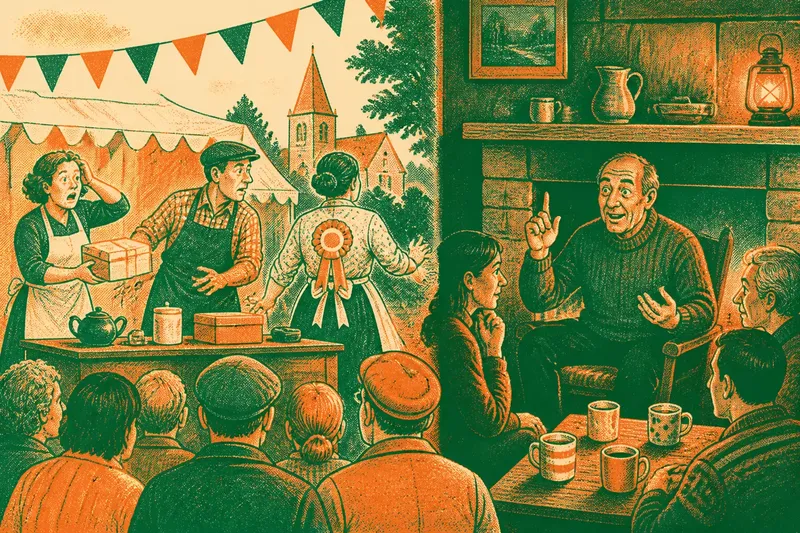
Place-based comedy often grows from a mismatch between what someone expects and what the place allows. A person expects the lane to be quiet, then discovers that every neighbour has chosen the same narrow stretch for a dog walk. Someone expects the noticeboard message to be obvious, only to learn that “bring a dish” has produced an assortment of bowls, pans and one rather ambitious cake.
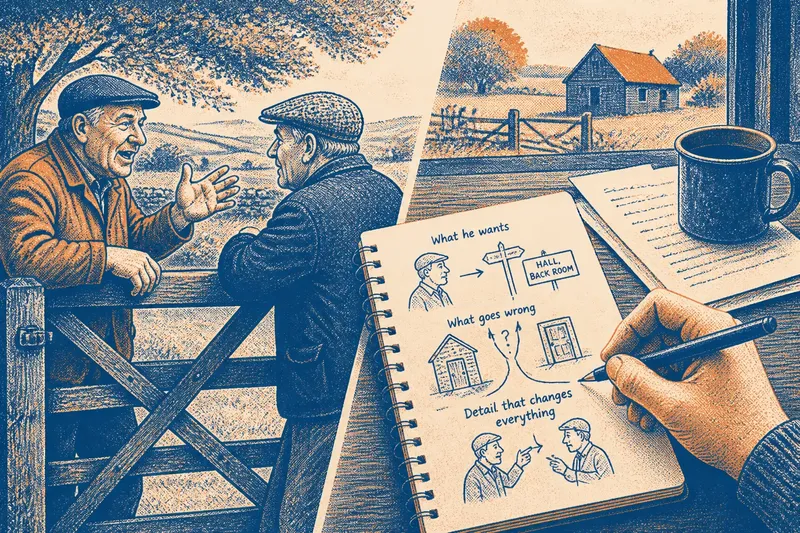
The host can help a story find its turn by asking a simple question: “What did you expect to happen, and what happened instead?” This is not a demand to add a joke. Sometimes the comic moment is the teller’s mistaken confidence; sometimes it is the setting quietly refusing to cooperate.
Specific details help more than elaborate performance. The squeak of a gate, the damp paper curling at the edge of a notice, or a dog waiting beside a stile gives listeners something to picture. A teller can pause, repeat a phrase or speak plainly. No special voice or theatrical gesture is required.
In the imagined kitchen, one neighbour starts with a bus shelter and says that everyone is waiting for the same bus, though nobody agrees on where it stops. The teller lets each person explain their certainty, then ends with the bus passing the shelter without stopping. The group can picture the shelter and the awkward silence; the story’s humour comes from the mismatch, not a put-down aimed at a real passenger.
When a story wanders, a gentle question can bring it back: “Where were you standing when that happened?” A precise place often gives the teller a path back into the moment without the host taking over.
Questions Readers Ask?
How long should each story be?
Keep the invitation modest: a moment, a scene or a short tale is enough. If a teller wants to continue, let the room settle and listen; if the moment is brief, do not ask them to pad it out.
What if nobody wants to speak first?
The host can offer a tiny invented story or ask people to choose a prompt silently before inviting volunteers. Passing is a valid answer, and a little quiet is not a sign that the gathering has failed.
Can someone tell a story that really happened?
Yes, if the teller is comfortable sharing it and can do so without exposing someone else to unwanted embarrassment. Changing names or combining details can keep the comic focus on the situation rather than a recognisable person.
How can younger children join in?
Offer them a choice between speaking, drawing a place or adding one detail to someone else’s story. A child’s contribution can be a sound, an object or a surprising ending rather than a complete beginning-to-end tale.
Letting The Circle Settle
As the afternoon continues, the host notices when attention starts to wander. That is a cue to offer a stretch, refill the kettle or switch to a quieter prompt, not to insist that everyone produce one more story. A gathering can finish while people still feel comfortable, rather than waiting until the room has run out of energy.
The host might ask for one last image rather than a final performance: a place from the stories that people can still see in their minds. The child names the puddle; another person recalls the noticeboard; the older neighbour describes the shelter roof tapping in the rain. These fragments show how the same local world has held different comic possibilities.
In this invented situation, the afternoon ends with no polished show and no single story declared best. The quiet child has contributed a detail, the neighbour has shared a memory, and the listener has enjoyed the tales without being pressed to speak. The result is modest but meaningful: people have noticed the familiar landscape together, and each has been free to decide how much of themselves to put into it.
A rainy afternoon story circle works best when its prompts open a door rather than set a task. Keep a few place-based ideas ready, offer more than one way to join, and let the setting do some of the comic work. The rain may keep everyone indoors, but the lane, gate or shelter can still bring the room somewhere worth visiting.