The Farmer Character Is Not the Whole Joke
The farmer character becomes memorable when a specific motive drives the joke. Learn how choices, relationships and local detail make rural comedy richer.
What makes a farmer character funny once the muddy boots and blunt manner are out of the picture? In rural comedy, the farmer character works best when a particular want pushes them into a revealing choice. The occupation gives a story its surroundings; motive and behaviour give the character comic life.
Give the character a private aim
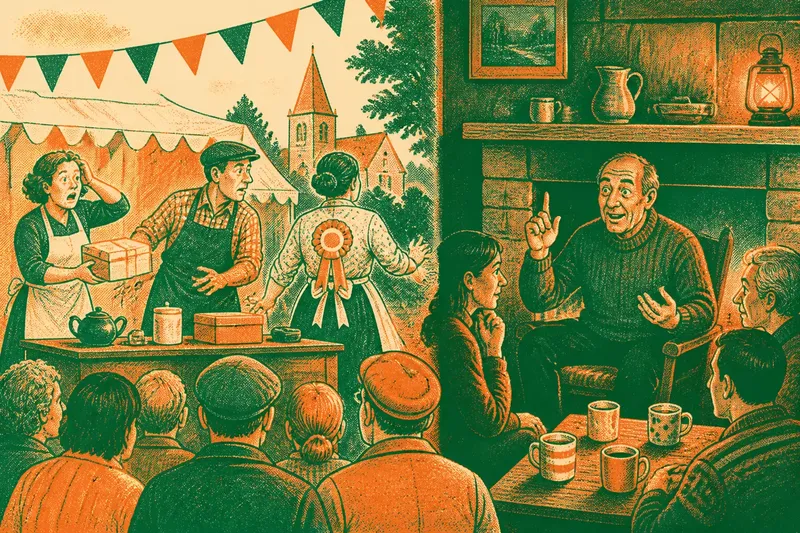
- 1. Make the motive more specific than the job. “A farmer wants a good harvest” is a setting, not yet a comic engine. Perhaps this farmer wants to be consulted about every decision, even the choice of biscuits for a village meeting. The smaller, more personal aim gives the audience something to watch: how far will the character go to get their way?
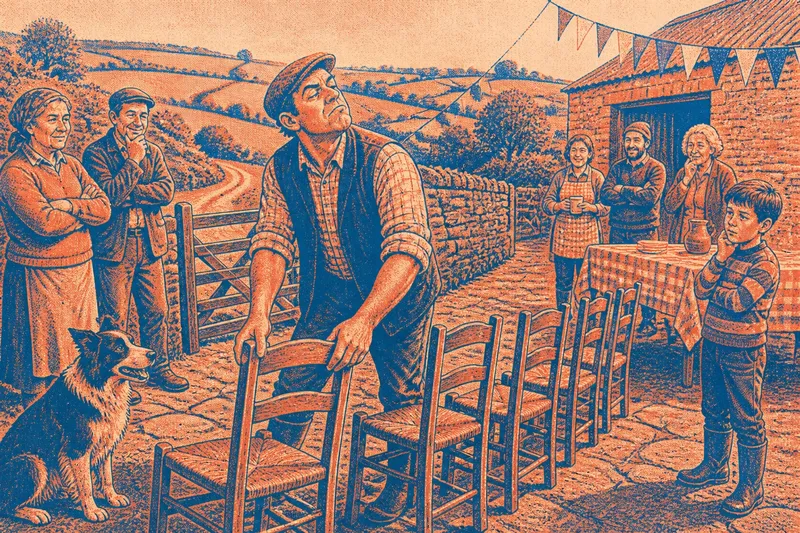
- 2. Let pride distort a sensible plan. A character may start with a reasonable goal and then refuse to adjust when circumstances change. Imagine a farmer determined to present a perfectly straight row of chairs at a community supper, despite the sloping floor and everyone trying to sit down. The expected comic result comes from the mismatch between the modest problem and the determination to control it.
- 3. Attach the joke to a choice. An occupation can suggest what a character knows, but it should not dictate every punchline. A farmer might choose to conceal a minor mistake, ask an unexpected person for help, or make a grand announcement before checking a detail. Each choice reveals a distinct temperament, so another character in the same work clothes could behave differently.
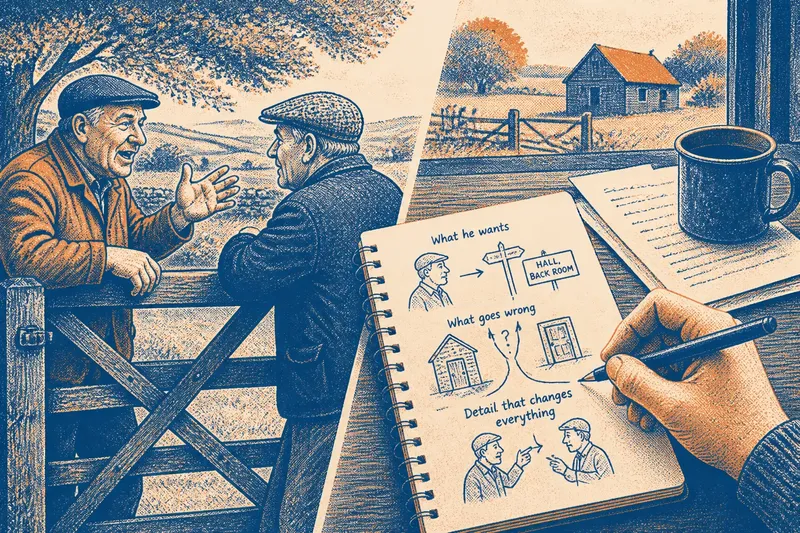
For a quick character sketch, write down what the person wants before deciding what makes them amusing.
Let habits create friction
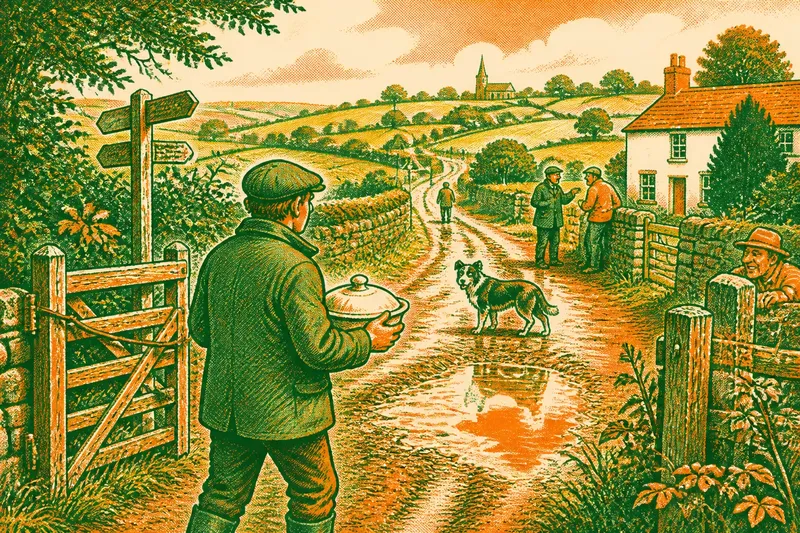
- 4. Build a habit with a consequence. A habit becomes comic when it affects someone else or makes a simple task awkward. Say a farmer insists on giving every visitor an unsolicited tour of the tool shed. If a neighbour has arrived to return a borrowed bowl before a meeting, the tour may stretch the visit and expose the farmer’s need to be admired. The humour belongs to that need, not to the shed or the occupation.
- 5. Give the character a blind spot. A farmer who reads weather signs carefully may still fail to notice that a friend is annoyed. That contrast can make a scene warm as well as funny. The character’s competence remains real; the blind spot simply shows that practical skill does not make anyone perceptive in every part of life.
- 6. Use local knowledge selectively. Details such as a familiar gate, a muddy track, a shared shed or the timing of a village event can make a character feel rooted. Choose details that affect what the person does. A gate that sticks might delay an overly formal greeting; it need not become a running gag merely because the story is rural.
One useful test: remove the word “farmer” from a scene and see whether the character’s motive still comes through.
Make relationships do work
- 7. Give other characters their own priorities. A farmer is not automatically the centre of a rural community. A neighbour may care more about getting home, a cousin may want to avoid being volunteered, and a child may be intent on keeping a secret. Their competing aims create comic pressure without reducing everyone to an audience for the farmer’s antics.
- 8. Let familiarity sharpen the exchange. People who know one another can use small, precise observations rather than broad insults. A neighbour might quietly point out that the farmer has brought a notebook to a casual tea, after which the farmer tries to claim it is only for emergencies. The exchange lands because it hints at a history of over-preparation, not because one character is a generic country eccentric.
- 9. Allow affection to have limits. Fondness does not mean everyone must indulge the same behaviour. A friend can laugh at a boast and still refuse to help with an unnecessary scheme. That refusal gives the farmer a meaningful choice: adapt, argue, or press on alone. The scene becomes richer when the others are people with boundaries rather than a chorus of approving reactions.
Keep the comedy precise
- 10. Replace the stock trait with an observable detail. “Blunt” tells us little; a farmer who answers a question about the weather by listing every reason the asker should have brought a coat gives us a voice and a social habit. Specific behaviour lets readers recognise the character without relying on a bundle of familiar rural stereotypes.
- 11. Make consequences fit the scale of the choice. A small act of showing off might cost the farmer a little time or make a neighbour laugh. It need not trigger an implausible disaster. Rural comedy often has room for a modest consequence that changes the mood of a gathering or leaves a character gently embarrassed.
- 12. Give the character a chance to respond. A joke can reveal more than one side of a person if the scene continues after the laugh. Perhaps the farmer notices a neighbour’s discomfort and offers a sincere apology, or doubles down and makes things worse. That response tells us whether pride, kindness, anxiety or stubbornness is steering the character now.
Questions about farmer characters?
Does the farmer need to be the main comic character?
No. A farmer can be the focus of one scene and a supporting presence in the wider story. Let the role follow the character’s motive, rather than assuming the occupation deserves centre stage.
How can rural comedy avoid stereotypes?
Give the character individual aims, habits and relationships, then make the humour arise from their decisions. Keep practical knowledge and local life specific, rather than treating rural speech or work as a joke by itself.
Can a farmer character be serious as well as funny?
Yes. A character may be funny in one situation and thoughtful or capable in another. Those shifts make the comic moments feel like part of a whole person instead of a single repeated gag.
What makes a rural detail worth keeping?
Keep it if it changes a choice, colours a relationship or gives the scene a recognisable texture. If it does none of those things, the detail may be decoration rather than part of the comedy.
Let motive lead
The farmer character is not the whole joke because no occupation can supply a personality on its own. A familiar rural setting can make a scene feel grounded, but the character’s motive, decisions and effect on other people are what make the humour particular. Start with what this person wants, then let the place complicate the pursuit. That gives readers a character they can recognise even after the muddy boots have left the scene.